Plastic Water Bottle Safety Claims: What Manufacturers Can Document
Key Takeaways
- Food-contact documentation is product-specific; a generic certificate for a different bottle or resin does not support your SKU.
- A complete product brief covering bottle type, resin, closure, decoration, packaging, quantity, and destination market is required for an accurate quotation.
- ODM projects typically adapt existing supplier platforms; structural changes and new tooling require separate evaluation and may affect MOQ and cost.
- Sampling should move through stock, decorated, and pre-production stages with signed approval records before mass production.
- Inspection scope and performance requirements should be agreed in writing before production begins.
When a supplier says a plastic water bottle is “food safe” or “BPA free,” what paperwork can they actually provide? The answer depends on the resin, the market, and the specific product—but a capable manufacturer can usually supply a defined set of test documents, declarations, and traceability records that support those claims.
What the buyer must define before requesting a quote
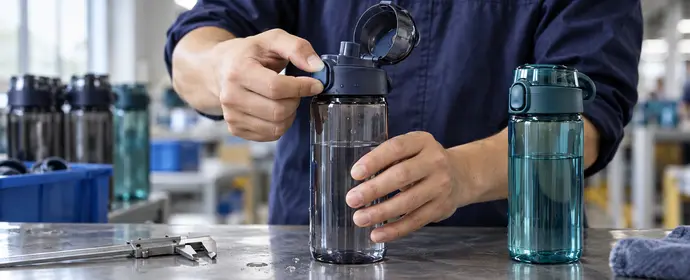
Before you ask for a price, define the product and the compliance context. A vague request like “a safe plastic water bottle” will produce a vague quotation. Instead, specify the bottle type, the intended use, the destination market, and the claims you plan to make on packaging or in marketing. That lets the supplier match the right resin grade, closure system, and documentation package to your project.
Start with the end market. Food-contact requirements differ by region, and the documents a supplier provides for one market may not satisfy another. If you plan to sell into the EU, the US, or another regulated market, state that up front. Also clarify whether the bottle is for single-use retail, reusable consumer use, promotional giveaway, or institutional supply—each use case can affect material selection and testing scope.
Product brief: bottle type, capacity, material, closure, color, logo, packaging, quantity and destination market
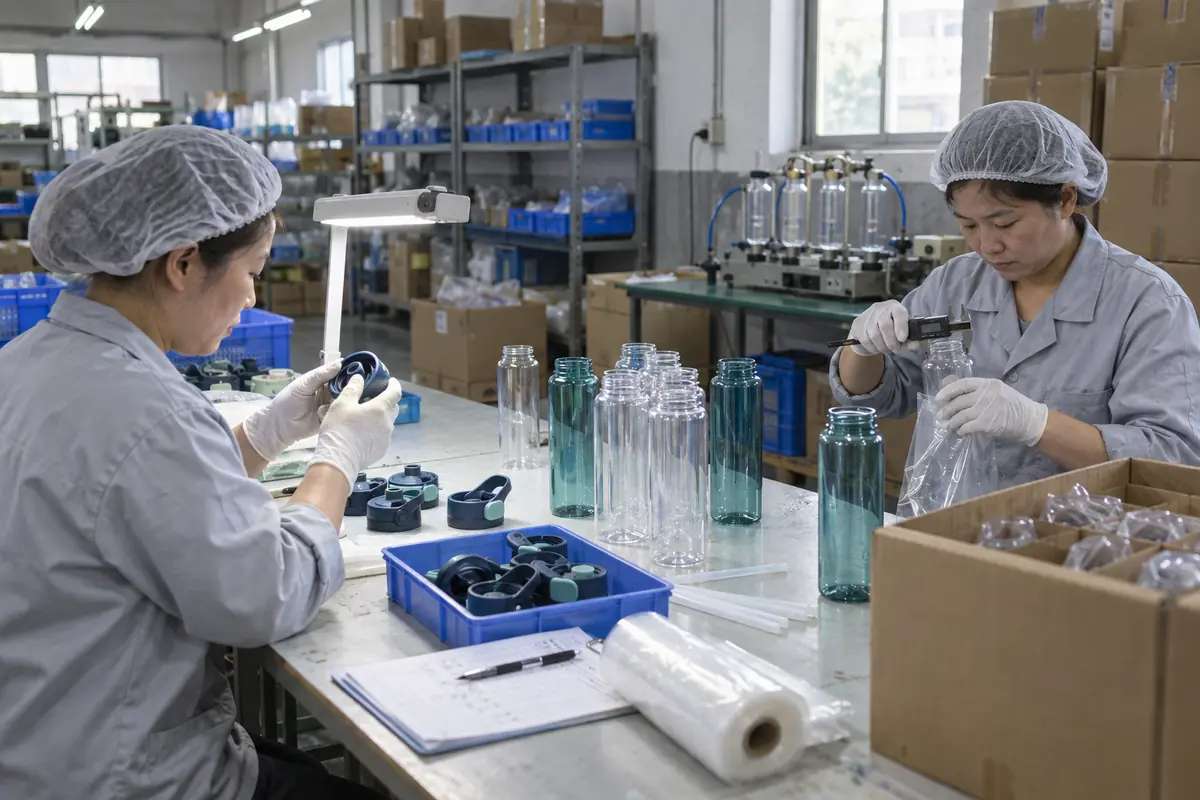
A complete product brief is the foundation of an accurate quotation and a realistic documentation plan. The brief should cover:
- Bottle type and capacity: sports bottle, squeeze bottle, straw bottle, large-capacity jug, shaker, kids’ bottle, or another format. Capacity should be stated in the unit your market uses.
- Material: the resin family you want—for example, Tritan, polypropylene, polyethylene, or PET—along with any recycled-content requirement. Resin grade affects both performance and the documentation available.
- Closure and accessories: flip top, push button, straw, spout, handle, strap, filter, or infuser. Closure configuration influences leak-risk evaluation and the tests a buyer may request.
- Color and logo: whether you need solid color, frosted, translucent, or custom Pantone matching, and which decoration method you expect—screen printing, pad printing, heat transfer, or labeling.
- Packaging: poly bag, bulk carton, retail-ready box, display-ready packaging, or e-commerce mailer. Packaging choices affect carton marks and shipping documentation.
- Quantity and order structure: total units, expected repeat orders, and whether you need a single SKU or a multi-SKU assortment.
- Destination market: country of import, applicable food-contact framework, labeling language, and any retailer-specific requirements.
If you are still comparing formats, the plastic water bottle types buyer’s guide can help you narrow the field before you commit to a brief. For material-specific questions, the Tritan water bottle material overview explains how that resin family is positioned for reusable drinkware.
Existing molds versus new tooling, and when ODM development may be appropriate
Most bulk plastic water bottle projects start from an existing product platform. The supplier already has a mold or a family of molds, and the buyer customizes available elements: color, lid configuration, decoration, accessories, and packaging. This is the practical meaning of ODM in drinkware—you are adapting a supplier-developed design rather than inventing a new bottle from scratch.
Structural changes—new body geometry, a different neck finish, an integrated handle, or a novel closure—require separate evaluation. Tooling may need to be built or modified, and that changes the project timeline, the validation work, and the commercial structure. Do not assume that new tooling automatically means a higher minimum order quantity; the relationship depends on the mold, the material, and the supplier’s production setup. Ask for a written explanation of how tooling affects MOQ, sampling, and unit cost for your specific design.
ODM development is usually appropriate when your brand needs differentiation but the core bottle platform can remain stable. If you need a genuinely new shape or a proprietary closure, treat it as a development project with its own feasibility review, not as a standard customization order.
Sampling path: stock sample, decorated sample, pre-production sample and approval records where relevant
Sampling is where safety claims and product expectations meet reality. A typical path moves through several stages:
- Stock sample: an existing product from the supplier’s range, used to assess general form, feel, and closure function.
- Decorated sample: the stock bottle with your logo, color, or label applied, so you can evaluate print quality and brand presentation.
- Pre-production sample: a sample built to the agreed specification, including material, closure, decoration, and packaging, used for final approval before mass production.
- Approval records: signed sample approval sheets, color standards, artwork files, and packaging dielines that document what was approved and when.
Ask which tests are performed on the sample and which are performed on production units. Request the applicable test documents for the exact product and resin grade you are buying—not a generic certificate for a different item. If a supplier cannot provide a document for your specific SKU, treat that as a gap to resolve before you place a bulk order.
How MOQ, quotation, production timing and unit-cost direction depend on specification and order structure
MOQ, price, and timing are not fixed numbers that apply to every buyer. They move with the specification. A single-color bottle with a standard closure and bulk packaging will usually sit at a different cost and order threshold than a multi-color bottle with a custom lid, retail-ready packaging, and several decoration steps.
Order structure matters as much as total quantity. A program with repeat orders and stable forecasts gives a supplier more reason to plan production efficiently than a one-time order with an unusual specification. When you request a quotation, ask the supplier to break out the cost drivers: material, closure, decoration, packaging, and any tooling or setup charges. That breakdown helps you compare offers on a like-for-like basis and shows where a specification change would move the unit cost.
Production timing depends on material availability, decoration complexity, packaging, and the supplier’s current schedule. Rather than assuming a lead time, ask for a production schedule tied to your approved sample and order quantity. If your launch date is fixed, share it early so the supplier can flag any scheduling risk.
Quality confirmation, inspection scope, packaging, carton marks, shipping terms and documentation
Quality confirmation should be defined in writing before production. The inspection scope typically covers appearance, color match, decoration placement, closure function, and packaging conformity. If your product has specific performance requirements—such as leak resistance or drop resistance—state them in the specification and ask how they will be verified. Do not rely on a general “quality guaranteed” statement.
Packaging and carton marks deserve the same attention. Confirm poly bag requirements, carton configuration, unit counts per carton, and any retailer-specific labeling. Carton marks should include SKU, quantity, and handling information as agreed. Shipping terms—FOB, CIF, or another Incoterm—determine where responsibility transfers, so align them with your freight forwarder and the supplier’s documentation.
Documentation for food-contact compliance is product-specific. A supplier may be able to provide a declaration of compliance, a migration test report, a resin datasheet, or a safety data sheet, depending on the material and market. Ask for the documents that apply to your exact bottle, closure, and decoration, and confirm they are current. For a broader view of how documentation fits into the manufacturing process, see the manufacturing overview.
RFQ checklist for an accurate quotation and the next step for submitting project details
Use this checklist to prepare a request for quotation that a manufacturer can answer accurately:
- Bottle type, capacity, and intended use
- Resin family and any recycled-content requirement
- Closure type and accessories
- Color, finish, and decoration method
- Logo or artwork files and Pantone references
- Packaging format and carton mark requirements
- Order quantity and forecast
- Destination market and required compliance documents
- Target launch date and delivery terms
- Any performance requirements to be verified
When you submit these details, ask the supplier to confirm which documents they can provide for the exact product and market. That response tells you as much about the supplier’s capability as the price does.
Ready to move from specification to quotation? Submit your project details through the inquiry page, or review the customization options and sample request process to see how a plastic water bottle program can be structured around your market and volume.
| Project element | What to define | Documentation to request |
|---|---|---|
| Product brief | Bottle type, capacity, material, closure, color, logo, packaging, quantity, destination market | Specification sheet and approved sample record |
| Material and food contact | Resin family, grade, recycled content if required | Resin datasheet, declaration of compliance, applicable migration test report |
| Mold and tooling | Existing platform or new tooling; structural changes | Tooling evaluation and written MOQ/cost impact |
| Sampling | Stock, decorated, and pre-production stages | Signed sample approval and color/artwork standards |
| Quality and inspection | Appearance, function, packaging conformity, performance requirements | Inspection scope and test method agreement |
| Packaging and shipping | Poly bag, carton configuration, carton marks, Incoterms | Packaging specification and shipping documents |
Frequently Asked Questions
What documents can a plastic water bottle manufacturer provide for food-contact compliance?
Depending on the resin, market, and product, a manufacturer may provide a declaration of compliance, migration test reports, resin datasheets, and safety data sheets. Request the documents that apply to your exact bottle, closure, and decoration, and confirm they are current for your destination market.
Does a BPA-free claim require a specific test report?
A BPA-free claim should be supported by documentation tied to the resin and product. Ask the supplier for a material declaration or test report that covers the specific resin grade used in your bottle, rather than relying on a general marketing statement.
How do I verify leak resistance or drop performance for a custom bottle?
State the performance requirement in your product specification and ask how it will be verified during sampling and production. The supplier should describe the test method and provide results for the agreed sample or production lot where applicable.
What is the difference between a stock sample and a pre-production sample?
A stock sample is an existing product used to assess general form and function. A pre-production sample is built to your agreed specification, including material, closure, decoration, and packaging, and is used for final approval before mass production.
Can I get a quotation without a complete product brief?
You can request one, but the quotation will be provisional. A complete brief covering bottle type, resin, closure, decoration, packaging, quantity, and destination market allows the supplier to provide a more accurate price and timeline.