Custom Water Bottle MOQ Planning: Models, Colors and Packaging Batches
Custom water bottle MOQ is a condition of a specific production configuration, not one universal number for every bottle in a catalog. The quantity may need to be considered separately for the body model, material, body color, lid color, decoration and printed packaging. A large combined order can still contain individual batches that are too small for the agreed setup.
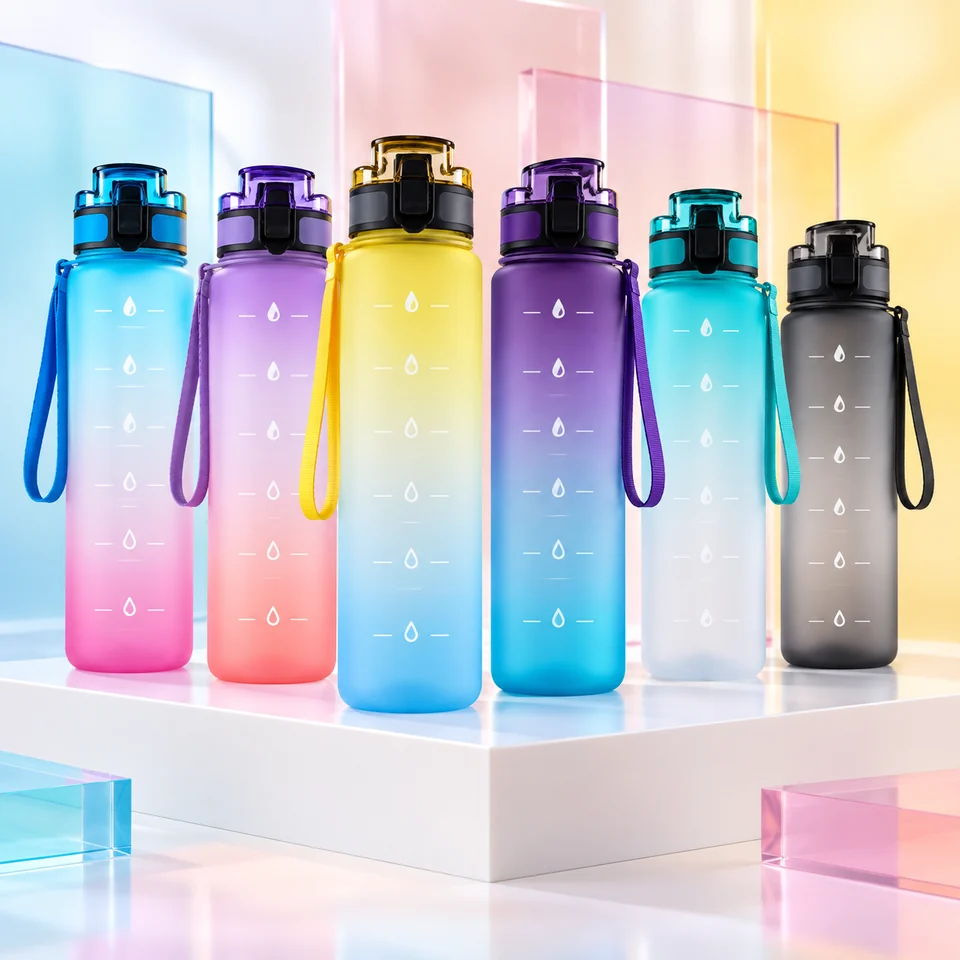
Prepare a quantity brief that separates model, body color, decoration and packaging batches. Ask the supplier to state the minimum for each batch and confirm whether variants can be combined. The useful question is not only "What is your MOQ?" but "What minimum applies to each part of this exact order?"
Distinguish Ready Stock, Existing Tooling and New Development
Start by identifying what the supplier is being asked to make. Ready stock may already have a fixed material, color and lid. An existing mold can avoid new body development, but custom colors or packaging may still need their own batches. A new structure introduces a different approval and production commitment.
| Project level | Information the buyer needs | Quantity issue to clarify |
|---|---|---|
| Ready-stock purchase | Available models, colors, components and current units | Whether the required stock exists and what customization is possible |
| Existing model with Logo | Final decoration process and print positions | Minimum and setup conditions for the decoration job |
| Existing model with custom colors | Body and lid color specification | How molding or sourcing batches apply to each component |
| Printed packaging or a kit | Packaging artwork, accessories and assembly | Minimums per printed design or purchased component |
| New product or tooling | Design scope, ownership terms and development stages | Development commitments distinct from the bulk quantity |
Do not treat a sample fee as a bulk MOQ or a tooling payment as an agreed unit price. Ask for those items separately. A stock sample can help evaluate a model but does not establish that the desired production quantity is commercially available.
Break the Order Into Production-Relevant Variants
Define a saleable SKU, then show which production settings it shares with the other SKUs. Two colors of one model may share a lid, while two bottles with the same nominal volume may use different tooling. A supplier cannot accurately judge batch compatibility from the total unit count alone.
Prepare one row per configuration:
| Quantity-brief field | Example of the detail needed |
|---|---|
| Body model | Exact model or approved product reference |
| Body material and color | Confirmed specification and color reference |
| Lid and accessories | Part references, colors and included items |
| Decoration | Artwork revision, method, colors and positions |
| Individual package | Structure and artwork revision |
| Requested units | Quantity for this configuration, not only a combined total |
| Receiving plan | Destination, allocations and required arrival window |
Ask the supplier to identify which minimums are per model, per body color, per lid color, per artwork or per package. Also ask whether a minimum is a production requirement, a purchase condition or a price-break preference; those are not necessarily the same thing.
Check Why a Total Quantity Can Mislead
Consider an illustrative order of 1,200 bottles split into three body colors at 400 units each. If a supplier has confirmed a 500-unit minimum per body-color batch for that configuration, the total does not make those three 400-unit batches qualify. Splitting the same total into two colors at 600 units each could satisfy that particular condition, while decoration and packaging still need separate checks.
Those numbers are an arithmetic example, not WaterBottleWorks pricing or a published factory MOQ. Use the actual supplier's written conditions before making a decision.
The same issue occurs with packaging. A single body-color run split across several printed box designs can create small packaging batches. Conversely, a shared package may be usable for several variants only if identity, label placement and receiving requirements remain correct. Do not simplify the box by removing information the sales channel needs.
Reduce Complexity Before Asking for a Lower Minimum
The first order does not need every future variant. Choose a coherent starting range and retain specifications that matter to the intended buyer. Reducing redundant choices can make the order easier to quote and approve without removing useful functions.
- Ask about a currently available body-and-lid configuration before requesting structural changes.
- Limit body colors where they add inventory but little meaningful choice.
- Consider shared component colors only when the parts are confirmed compatible.
- Compare one approved decoration layout with several different layouts.
- Review common packaging structures with correct variant labels.
- Separate essential launch products from optional later additions.
These are discussion options, not promises that the supplier can combine batches. Shared appearance does not prove shared tooling or interchangeability, and a single carton mix does not mean the upstream molding quantities can be combined.
For gym, event or retail allocations, calculate the end-use quantities in the relevant scenario page. Then translate those allocations into production rows for the MOQ review. The event bottle scenario and retail program scenario address that distribution side of the order.
Compare Quotations on the Same Configuration
Ask for a quotation that separates the proposed unit specification from setup, sampling, tooling, packing and freight terms. An apparently lower unit price may refer to fewer print positions, a different lid or simpler packaging. Without a like-for-like specification, price and minimum comparisons are unreliable.
The supplier's response should state:
- The exact model and component configuration being quoted.
- Minimum quantities and whether they apply to each variant or shared batch.
- Decoration and package details included in the offer.
- Any separate setup, sample, development or tooling charges.
- Agreed commercial and delivery terms, including what is excluded.
- The production-release assumptions and approval stages.
Use the Logo printing guide to make decoration scope comparable and the packaging guide to define the complete packed unit. Neither a generic Logo requirement nor "retail box included" provides enough detail by itself.
Plan Timing Around Confirmed Approvals and Availability
MOQ and lead time are related to the configuration, but one cannot determine the other. An available stock color, a custom molded color and a new printed box may have different scheduling dependencies. Request a schedule that identifies approvals, component availability, production, inspection and delivery rather than only the date the bottles leave the molding machine.
Record whether the quoted delivery window assumes approved artwork and payment by a stated date. If the first sample needs revision, check what that does to the release date. Do not promise an opening or event arrival from an unconfirmed general lead time.
Before combining an order to reach a minimum, consider how the buyer will identify, receive and store the variants. Extra units that do not serve the range can create a different problem from a higher initial minimum. Order quantities should follow both production feasibility and a defensible stock plan.
Recheck Minimums for Reorders and Revisions
Do not assume a previous order permanently establishes its commercial conditions. Confirm current availability and minimums for the same model, colors, decoration and packaging. A discontinued component or a revised package can change the configuration even when the product name stays the same.
Keep the approved specification, order history and variant quantities together. If a reorder changes only quantity, state that clearly; if a part or artwork changes, identify the revision and affected approvals. The sample approval guide provides the release-record structure.
MOQ Planning Questions
Is the MOQ normally based on my combined order total?
It may be, but it can also apply separately to models, colors, decoration or packaging. Ask the supplier to mark each applicable minimum on the configuration table instead of interpreting one combined total yourself.
Can I mix body colors to reach a production minimum?
Only if the supplier confirms that arrangement for the selected material and model. A mixed shipment or carton is not proof that separate body-color batches qualify under one minimum.
Does using an existing mold remove every setup cost?
No. Decoration, custom color preparation, packaging, samples or other work can still have separate conditions. Request an itemized proposal rather than assuming existing tooling means no setup work.
Can several variants use one printed box to reduce packaging batches?
Possibly, if the structure fits and the final label correctly identifies each saleable item. Confirm how variant information is applied and whether the receiving channel accepts that arrangement.
Should I add unwanted colors just to obtain a lower unit price?
Review the range and inventory consequences first. Compare a simpler supported configuration and its complete delivered terms; a price break alone does not make surplus variants useful.
Will my next order automatically keep the original minimum?
Not necessarily. Confirm current component availability, commercial conditions and revision status. Keep the previous approved specification as a reference, but obtain an updated written quotation.
A clear MOQ request is a table of real configurations and quantities. Send that table with the decoration, packaging and destination requirements so the supplier can explain which batches can be shared and which must stand alone.