
What Makes a Water Bottle Leakproof? Lid and Thread Design

Key Takeaways
- A leak-resistant plastic water bottle depends on a matched system of bottle neck, cap thread, seal, and closure mechanism, not a single part.
- Customization such as printing or coating can affect sealing surfaces if functional areas are not protected and verified.
- Buyers should define fit, function, appearance, and tolerance criteria in a dated sample approval record.
- Production inspection should separate verified findings from possible causes and rely on records, samples, and testing.
- Correct cleaning, complete drying, and proper storage help maintain seal and thread performance.
What makes a water bottle leakproof? A leak-resistant plastic water bottle depends on a matched system: bottle neck finish, cap thread, seal geometry, closure mechanism, and venting. No single part guarantees leak resistance; the assembly must be designed, molded, and inspected as one unit.
Likely cause categories and the first check
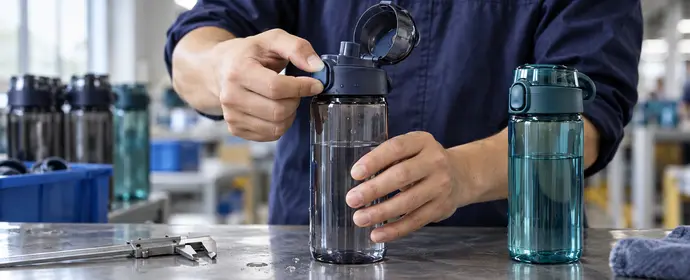
When a plastic water bottle leaks, the first check is to separate design limits from production variation and use conditions. Start by confirming the exact bottle, cap, and seal configuration against the approved sample and specification. Then review whether the leak appears at the thread, seal, straw, vent, or cap hinge. This triage prevents assuming a batch defect when the issue is a mismatched component or a closure that was not fully engaged.
Common cause categories include:
- Design and component mismatch: bottle neck finish, cap thread, or seal not designed as a system.
- Molding variation: thread dimensions, neck ovality, seal seat flatness, or cap concentricity outside the approved range.
- Assembly and handling: cross-threading, over-tightening, damaged seal, or incomplete closure.
- Customization effects: decoration, surface preparation, or curing that alters fit or seal performance.
- Use and care: cleaning method, drying, storage, or exposure to conditions outside the product’s intended use.
For any specific product, request the applicable specification, test document, and approved sample before drawing conclusions. The sections below explain what to review and what evidence to collect.
Design and component factors: bottle neck, cap, seal, straw, vent and assembly
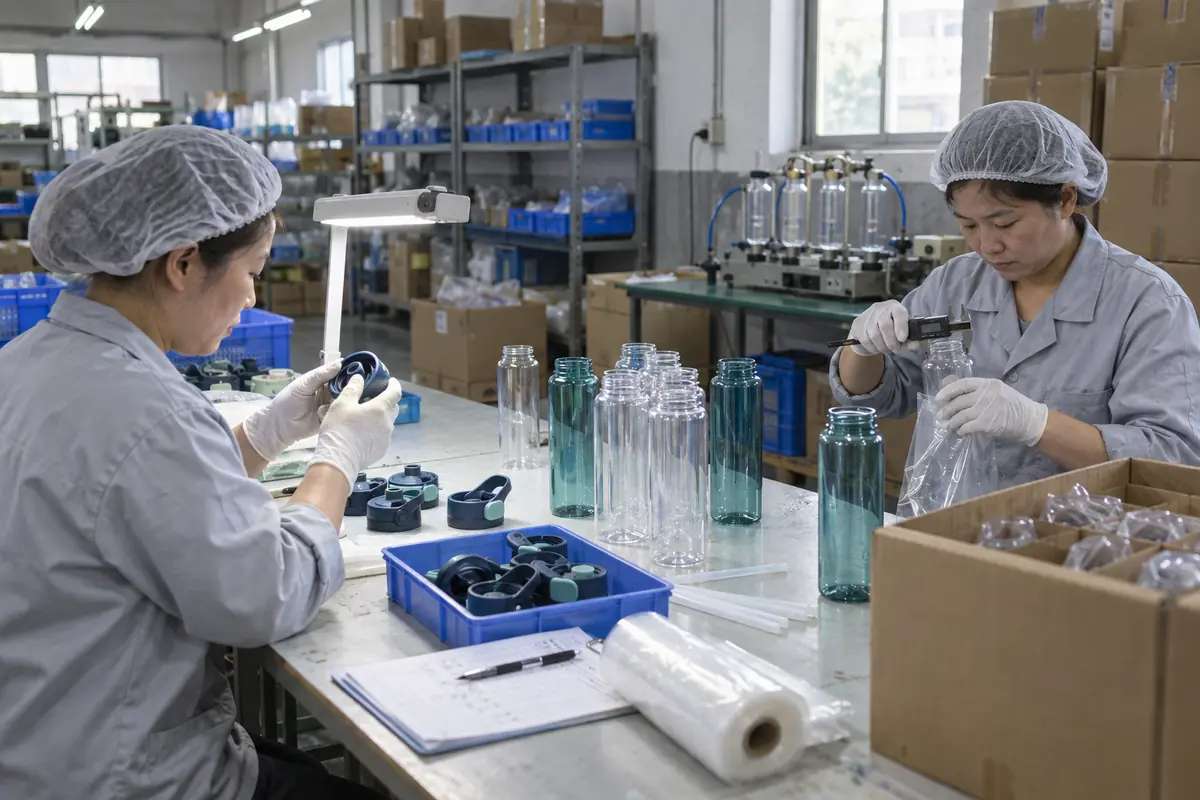
Leak-resistant water bottle design starts at the bottle neck and cap interface. The neck finish includes thread profile, thread pitch, neck diameter, sealing land, and the area where the cap or seal contacts the bottle. The cap must match that finish: thread engagement, cap skirt, top-load strength, and seal compression all affect whether the closure stays tight under normal use.
Bottle neck and thread
Thread design determines how the cap engages and how evenly sealing force is distributed. A thread that is too shallow, too steep, or inconsistent around the circumference can allow the cap to cock or loosen. Neck ovality and thread flash can create local gaps. Buyers should review the bottle neck drawing and the supplier’s dimensional inspection records for the approved mold and production batch.
Cap, seal, and liner
The seal may be a molded feature, a liner, a gasket, or a plug design. Seal material, hardness, compression set, and contact width matter. A seal that is too hard may not conform; one that is too soft may deform or take a set. The cap’s internal geometry must hold the seal in place during tightening and opening. For products with a flip-top or push-button lid, the secondary seal or spout closure also needs review.
Straw, vent, and pressure balance
Straw water bottles and sports bottles with venting introduce additional leak paths. A straw port, vent hole, or pressure-equalization feature can leak if the valve or seal does not close fully. Squeeze water bottles depend on the cap and nozzle sealing when not in use. Buyers should confirm how the vent or straw system is intended to behave and what tests the supplier uses to verify closure.
Assembly and component fit
Assembly errors such as cross-threading, missing seals, or reversed components can cause leaks even when individual parts meet specification. The supplier should define assembly checks and provide work instructions for the approved configuration. For custom bottles, confirm that the cap, seal, straw, and bottle are approved as a set, not as separate items.
Customization factors: surface preparation, print method, artwork, curing and handling
Customization can affect leak resistance when decoration or surface treatment changes the sealing surface, thread, or cap fit. Common customization methods include screen printing, pad printing, heat transfer, labeling, and coating. Each method has its own surface preparation, ink or film, curing, and handling requirements.
Key questions for the supplier:
- Does the decoration process contact the sealing land, thread, or cap interior?
- Is masking or tooling used to protect functional surfaces?
- What curing or drying steps are required, and how are they verified?
- Could the process introduce residue, deformation, or dimensional change?
Artwork placement should avoid critical sealing zones. If a design requires decoration near the neck or cap, the buyer and supplier should agree on the approved sample and inspection criteria. For custom logo water bottles and private label programs, the approved sample should include the final decoration, not an undecorated reference. Review the customization page for process options and request the applicable specification for your design.
Sample-approval records and tolerances or appearance criteria the buyer should define
A sample approval record is the buyer’s reference for production. It should identify the exact bottle, cap, seal, straw, and decoration configuration, and include the criteria used to approve fit, function, and appearance. Without a signed or dated approval record, production disputes become difficult to resolve.
Define criteria in these areas:
- Fit and function: cap engagement, opening and closing force, seal contact, straw or vent operation, and closure security.
- Appearance: color, gloss, print registration, decoration placement, and acceptable cosmetic limits.
- Tolerances: critical dimensions for neck, thread, cap, and seal, with the measurement method stated.
- Packaging: how the approved sample is packed and protected.
Do not assume tolerances or appearance limits from another product. Request the applicable specification and sample for your program. The get sample page can be used to request physical references for evaluation.
Production inspection checkpoints for fit, function, appearance, color and packaging
Production inspection should verify that the approved configuration is maintained. Checkpoints typically include incoming component checks, in-process assembly checks, and final inspection before packing. The exact tests and frequencies depend on the product and supplier; request the inspection plan and test documents for your order.
| Aspect | What to review | Evidence to request |
|---|---|---|
| Bottle neck and thread | Thread profile, neck ovality, sealing land | Dimensional inspection records, approved sample |
| Cap and seal | Thread engagement, seal compression, liner fit | Component drawings, assembly checks |
| Straw and vent | Closure of straw port, vent valve, nozzle | Functional test records |
| Customization | Decoration placement, curing, protected sealing zones | Approved decorated sample, process specification |
| Production inspection | Fit, function, appearance, color, packaging | Inspection plan, batch records |
| Cleaning and storage | Cleaning method, drying, storage conditions | Care instructions, storage specification |
Inspection should distinguish verified findings from possible causes. A leak observed during inspection is a finding; the cause requires investigation with samples, records, and testing. Do not diagnose a batch or promise a corrective result without that evidence.
Correct cleaning, complete drying and storage practices for the approved product
Cleaning and storage can affect leak resistance. Residue, mineral buildup, or deformation from heat can interfere with seals and threads. Follow the care instructions supplied with the approved product. General practices include:
- Disassemble removable components such as caps, seals, and straws according to instructions.
- Clean with the recommended method and avoid abrasive tools that can scratch sealing surfaces.
- Rinse thoroughly and allow all parts to dry completely before reassembly.
- Store in a clean, dry place away from direct heat and sunlight.
- Do not over-tighten caps or force components during reassembly.
For products used in schools, gyms, or outdoor settings, confirm that the cleaning method is compatible with the decoration and materials. Request the applicable care and use specification from the supplier.
When to isolate stock, replace a component, investigate a batch or contact the supplier
Isolate stock when a leak pattern is repeated, when a component does not match the approved sample, or when the cause is unknown. Replacing a component is appropriate only when the replacement is approved for the bottle and the cause has been identified. Investigating a batch requires records that trace components, assembly, and inspection.
Contact the supplier when:
- Leaks occur across multiple units in a batch.
- Components do not match the approved sample or specification.
- Customization appears to affect fit or seal performance.
- You need test documents, inspection records, or corrective action information.
Provide the supplier with the product code, batch information, photos or videos of the issue, and the use conditions. This helps separate design, production, and use factors. For new programs, review the plastic water bottles category and submit an RFQ with your requirements.
Frequently Asked Questions
What is the most common cause of leaks in plastic water bottles?
Leaks often come from a mismatch between bottle neck, cap, and seal, or from production variation in those parts. Use conditions such as cross-threading or damaged seals can also cause leaks. The first step is to compare the unit to the approved sample and specification.
How does bottle thread design affect leak resistance?
Thread profile, pitch, and consistency determine how the cap engages and how evenly sealing force is applied. A poorly matched thread can let the cap cock or loosen. Buyers should review neck and cap drawings and dimensional inspection records.
Can custom printing or coating cause a water bottle to leak?
Decoration can affect leak resistance if it contacts sealing lands, threads, or cap interiors, or if curing changes dimensions. Suppliers should protect functional surfaces and verify the decorated sample. Review the customization process specification for your design.
What should a sample approval record include for a leak-resistant bottle?
It should identify the exact bottle, cap, seal, straw, and decoration configuration, and state fit, function, appearance, and tolerance criteria. The measurement method and packaging should also be recorded. A dated approval record supports production consistency.
When should a buyer isolate stock or contact the supplier about leaks?
Isolate stock when leaks repeat, components do not match the approved sample, or the cause is unknown. Contact the supplier with product code, batch information, and evidence of the issue. Do not assume a batch defect without samples, records, and testing.