32 oz Water Bottles: Lid, Handle and Branding Options
Key Takeaways
- A 32 oz water bottle is roughly one liter, so lid, handle and body shape should be defined before artwork is prepared.
- Screen printing, heat transfer and UV printing suit different artwork complexity and bottle surfaces, and the method should be confirmed on a physical sample.
- Body color and print color should be communicated separately using color numbers or physical references.
- Graduations, labels, inserts, color boxes and set packaging each need their own artwork and approval alongside the logo.
- A written sample checklist covering logo, placement, color, adhesion, packaging text and barcode data reduces revision risk before bulk production.
A 32 oz water bottle is roughly one liter, which makes it one of the most useful sizes for sports, commuting, office and promotional programs. Before you approve artwork, settle the lid and handle configuration, the bottle color, the decoration method and the packaging text, because those choices drive both the sample you receive and the quotation you sign.
Buyers often treat the 32 oz plastic water bottle as a simple commodity and then discover that the lid style, handle, surface finish and print method all interact. A design that reads well on a matte body may look different on a glossy or frosted one. A wide handle can crowd the logo area. A one-liter water bottle sold as a gym or outdoor item usually needs a different lid and branding approach than a promotional giveaway or a private-label retail SKU. This guide walks through the inputs a supplier needs, the main logo methods, artwork preparation, color communication and sample approval, so your team can move from concept to a confirmed order with fewer revisions.
Which customization inputs are needed before quoting
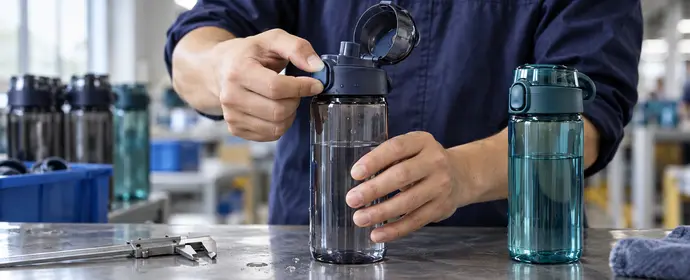
A useful quotation starts with a defined configuration, not a picture and a guess. Suppliers need to know the bottle body, the lid type, whether a handle or strap is included, the intended use, the decoration method and the packaging format. Each of these affects tooling, setup and the sample you will evaluate.
Prepare a short specification sheet that covers:
- Bottle and capacity: confirm the 32 oz or one-liter format, plus the body shape and whether the item sits in a sports, outdoor, office or retail range.
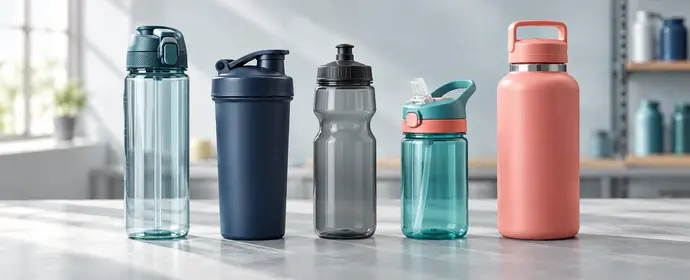
- Lid and closure: flip top, push button, straw lid, screw cap or shaker-style lid, and whether a handle, loop or strap is part of the design.
- Material family: the resin or material grade you want, with the applicable food-contact and compliance documents requested for your destination market.
- Decoration: logo method, number of colors, print position and whether the artwork wraps around the body.
- Packaging: poly bag, color box, insert card, set packaging or private-label carton, plus barcode and label data.
- Order context: target market, channel, expected volume range and any retail or promotional deadlines.
If you are still choosing between body styles, the plastic water bottle types buyer’s guide explains how lid, handle and body shape change the use case. For a one-liter sports or outdoor item, the large capacity water bottles collection is a practical starting point, while the customization page covers the broader decoration and private-label workflow.
Logo methods: screen printing, heat transfer and UV printing
Screen printing, heat transfer and UV printing are the three methods most buyers compare for custom 32 oz water bottles with logo artwork. Each has a different fit depending on color count, artwork complexity, bottle surface and the look you want on shelf or in a promotional pack.
Screen printing
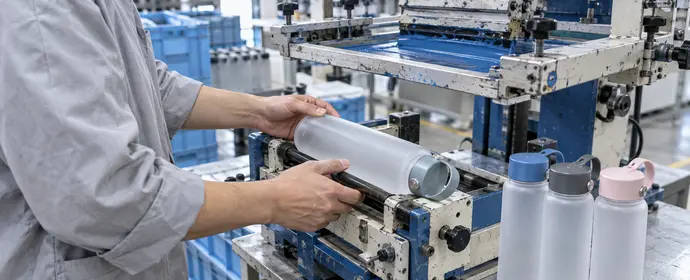
Screen printing applies ink through a mesh stencil, one screen per color. It suits bold, simple logos and solid lettering, and it can work well on curved bottle bodies. The practical limits are color count and fine detail: gradients, photographic images and very small text are difficult to hold cleanly. Adhesion and finish depend on the ink, the resin and the surface treatment, so the method should be confirmed against an actual sample on your chosen bottle.
Heat transfer
Heat transfer uses a printed carrier film applied to the bottle with heat and pressure. It can carry more colors and finer detail than a small screen set, which makes it useful for multi-color logos, small type and artwork with shading. The trade-off is that the transferred film has an edge and a hand feel that differ from direct ink, and performance on curved or textured surfaces varies. Ask for a sample that shows the actual artwork at production size before you commit.
UV printing
UV printing cures ink quickly under ultraviolet light and can reproduce detailed, multi-color artwork directly on the body. It is often considered for complex logos and short runs where separate screens would be impractical. Results depend on the bottle surface, the ink system and the pretreatment used, and not every plastic, shape or finish accepts every method equally. Confirm the proposed method against a physical sample rather than assuming a digital proof predicts the final look.
Whichever method you choose, the supplier should confirm suitability for your specific bottle, ink and market requirements. The custom logo water bottles page sets out the decoration options in more detail, and the private label water bottles page covers branding for retail programs.
Artwork preparation: vector files, print size, position, colors and readable detail
Artwork quality decides how much of your design survives the print process. Supply vector files, such as AI, EPS or PDF, with fonts converted to outlines and colors defined. Raster images can be accepted for reference, but they rarely hold up when scaled to a bottle body.
Define the print area before you design. On a 32 oz bottle, the usable area is affected by the shoulder curve, the handle, the lid and any graduation marks. Mark the intended position with a dimensioned layout and state whether the logo is centered, repeated or wrapped. Keep critical text large enough to read at arm’s length and avoid thin strokes that may fill in or break up.
Color specification matters as much as file format. Provide color references and state how many colors the design uses. If your brand relies on a specific shade, ask how the supplier will match it and whether a physical proof or sample is available. Do not assume a screen or digital preview represents the final ink on a colored or frosted body.
Bottle color matching, reference samples and color-number communication
Bottle color is a separate decision from print color, and the two interact. A translucent or frosted body changes how ink reads, and a dark body may need a different ink approach than a light one. Communicate the body color and the print colors separately, using color numbers or physical references rather than descriptive names alone.
Reference samples are the most reliable way to align expectations. Where a physical reference exists, send it or ask the supplier to propose a match and confirm it on a sample. Record the agreed color numbers in the purchase documentation so a repeat order has a written reference. If your program includes a one-liter water bottle in several colors, confirm each variant separately, because the same ink can look different across body colors and finishes.
Color matching is a process, not a single email. Build time into the schedule for a color sample and for any adjustment before bulk production. The material and compliance information for your chosen bottle should also be requested at this stage, since the resin and finish can affect both appearance and decoration.
Custom graduations, labels, inserts, color boxes, set packaging and private-label options
Branding extends beyond the logo. Many 32 oz programs include graduation marks, a label, an insert card, a color box or a multi-piece set, and each element needs its own artwork and approval.
- Graduations: printed measurement marks can support sports and hydration positioning, but the scale, unit and placement must be confirmed on the actual bottle.
- Labels: a wrap label or spot label can carry product name, volume, usage instructions and regulatory text, and it must fit the bottle’s curvature.
- Inserts: a card inside the box can carry care instructions, brand story or retail information.
- Color boxes: retail packaging needs dielines, barcode placement and text that matches the product exactly.
- Set packaging: multi-bottle sets or bottle-plus-accessory packs need a combined layout and a clear contents list.
- Private label: your brand, artwork and packaging replace the supplier’s, with the label and compliance text agreed in advance.
Packaging capability varies by supplier and by order, so confirm the formats available for your program rather than assuming a standard option. The retail and private label applications page and the private label water bottles page show how these elements come together for a retail launch.
Sample approval checklist: logo, color, placement, adhesion, packaging text and barcode data
A sample is the control document for bulk production. Approve it against a written checklist so that everyone is comparing the same details, and keep the signed sample or its photographs as the reference for the order.
| Checkpoint | What to verify | Why it matters |
|---|---|---|
| Logo and artwork | Correct file version, spelling, color count and detail | Prevents reprints and mismatched brand assets |
| Print placement | Position, orientation and distance from lid, handle and graduations | Keeps the design readable and balanced on the body |
| Color | Body color and print color against agreed references | Aligns the sample with the approved color standard |
| Adhesion and finish | How the decoration sits on the surface after normal handling | Reveals method suitability before bulk production |
| Lid and handle | Closure type, handle or strap, and fit with the body | Confirms the configuration quoted and sampled |
| Packaging text | Product name, volume, instructions and compliance wording | Matches the label and retail listing |
| Barcode data | Symbology, number and placement on the box or label | Supports retail scanning and listing requirements |
Where a claim depends on the product, material grade, market or supplier, request the applicable specification, test document or sample. That includes food-contact documentation, performance statements and any certification your retail channel requires. The get sample page explains how to request a physical sample for evaluation.
Where buyers should go next: review customization, products and inquiry options
With the lid, handle, color and decoration decisions defined, the next step is to match them to a bottle platform and confirm the details in writing. Review the plastic water bottles collection for body and lid options, compare the sports water bottles and large capacity water bottles ranges for one-liter formats, and check the customization page for decoration and private-label scope.
If your program is promotional, the promotional water bottles page covers event-oriented branding, and the gym fitness water bottles page covers training-focused designs. For retail, the wholesale water bottles page and the retail and private label applications page help frame volume and packaging questions. When the specification is ready, submit an RFQ with your artwork, target market and packaging requirements so the supplier can confirm the applicable sample, documentation and quotation.
Frequently Asked Questions
What is the difference between a 32 oz water bottle and a one liter water bottle?
A 32 oz bottle is approximately one liter, so the two terms are often used for the same size class. The exact capacity and dimensions depend on the specific bottle model, so request the product specification for the item you are considering.
Which logo method is best for custom 32 oz water bottles with logo?
Screen printing suits simple, bold logos with limited colors, heat transfer can carry finer multi-color detail, and UV printing is often considered for complex artwork. Suitability depends on the bottle material, shape and finish, so confirm the method with a physical sample.
Can I match a specific brand color on a plastic water bottle?
Color matching is possible within the limits of the chosen material, finish and decoration method. Provide color numbers or a physical reference, and approve the match on a sample before bulk production.
What artwork files should I send for bottle printing?
Send vector files such as AI, EPS or PDF with fonts converted to outlines and colors defined. Include a dimensioned layout showing print position and size so the supplier can confirm the printable area.
What should I check on a custom bottle sample before approving it?
Check the logo version and spelling, print placement, body and print color, adhesion and finish, lid and handle configuration, packaging text and barcode data. Keep the approved sample as the reference for the production order.