
Active adults with reusable water bottles beside a riverside cycling path

Custom School Water Bottles for Classrooms, Student Kits and Campus Activities

School water bottles need to fit the school routine as well as the student. Desk rules, refill stations, backpack storage and lost-property handling all influence the specification. Schools, uniform suppliers and parent associations should plan a consistent bottle with clear individual identification, practical cleaning and term-start distribution. The useful design is one that supports classroom organization without turning the bottle into a complicated accessory.

From Classroom Desks to Refill Stations and School Trips

Ask the school where bottles may be stored and which lids are permitted before selecting a model. Some classes keep bottles on desks, while others use a shared rack or backpack pocket. Refill height, opening size and classroom handling can rule out a design that looks suitable in a catalog.

Separate classroom use from sports-day and trip requirements. If one bottle must cover all three, prioritize reliable closure and student identification, then check that the volume and shape remain manageable for the intended year group.

  • Classrooms: stable placement and a lid suited to school rules.
  • Refill stations: opening access and bottle height checked at the actual outlet.
  • Backpacks: secure closure with no projecting parts likely to trigger opening.
  • Sports days: recognizable year-group colors and quick ownership checks.
  • School trips: a name panel that remains readable outside the classroom.
  • Student welcome kits: quantities sorted for efficient class distribution.
Choosing a School Bottle by Year Group and Storage Space

Compare 400-600 ml options for a compact student range and adjust for the intended age, filled weight and refill access. Older year groups may need different sizes. A single capacity for the whole school can simplify ordering but should not override user handling or classroom storage limits.

Flip or straw lids should be checked against the school policy and family cleaning routine. Clear bodies make contents easier to see, while opaque colors create a different visual identity. Confirm the actual material, component suitability and permitted care for the supplied product.

  • Desk footprint: assess stability without taking over the work area.
  • Bag and rack fit: measure the storage used by each year group.
  • Opening: check independent use in an appropriate supervised trial.
  • Cleaning parts: compare what families must remove and reseat.
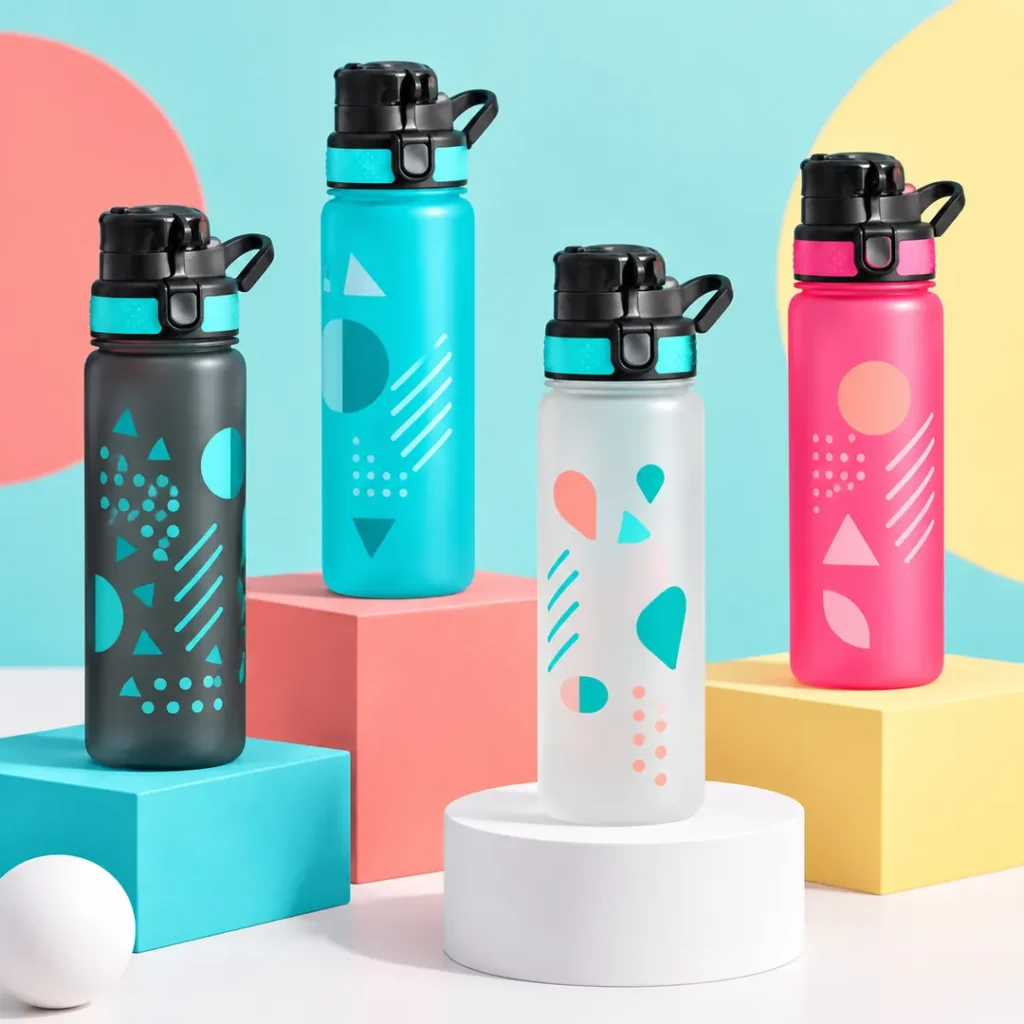
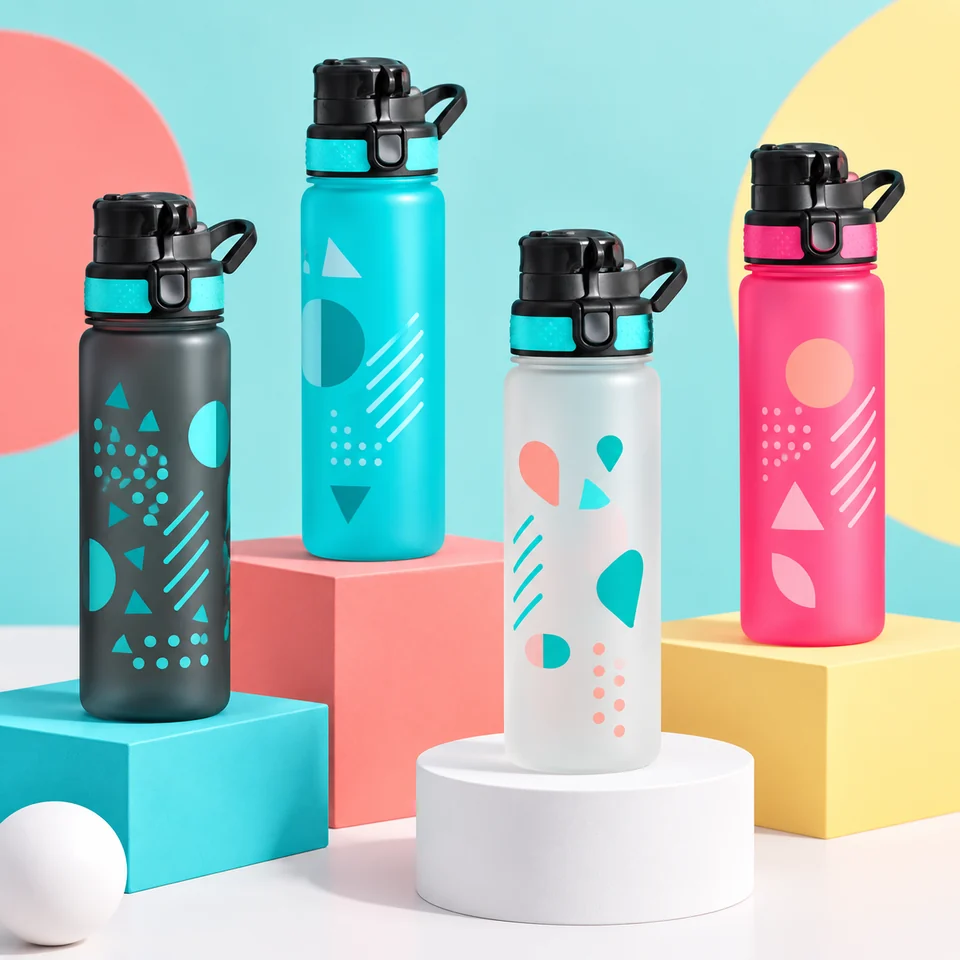
Teal, black, white and pink patterned bottles with dark flip-cover lids
Pattern and color variations for school merchandise and coordinated bottle ranges.
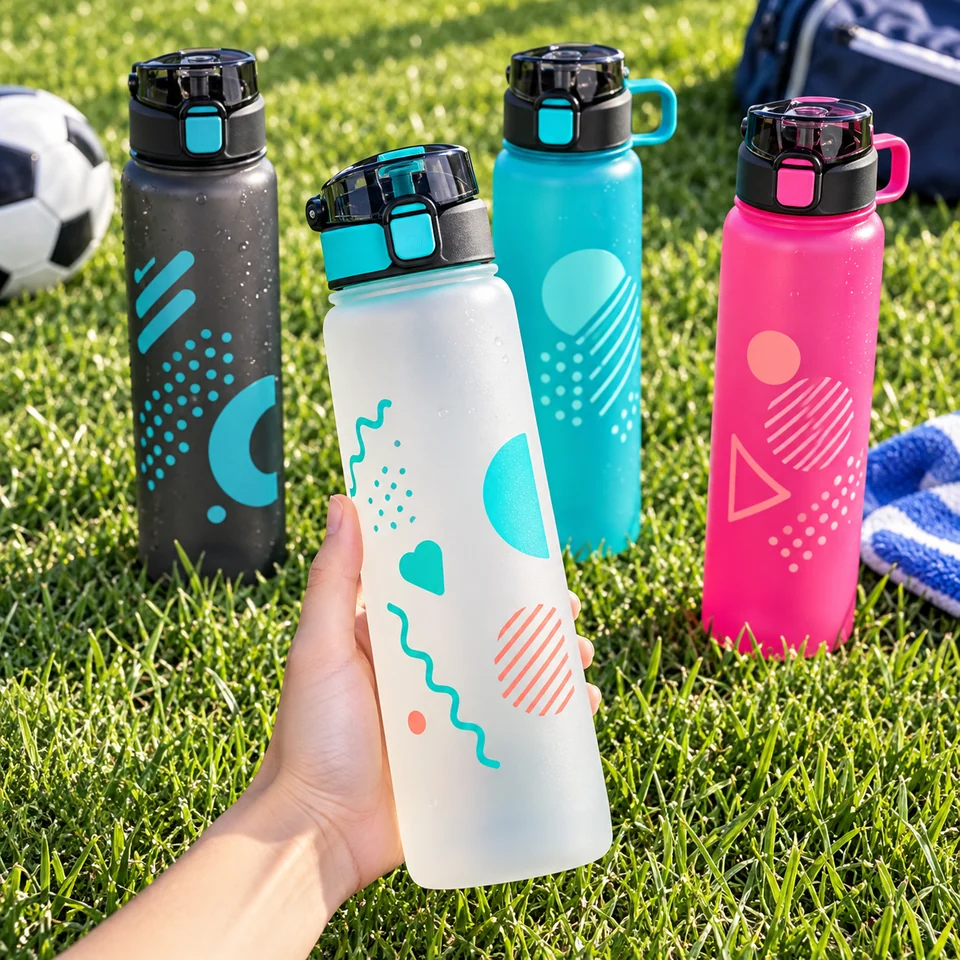
Patterned bottles on grass beside a bag with a white bottle held in one hand
The patterned collection presented outdoors with a carrying bag.

School Crest, Class Colors and Student Identification

The school crest should remain consistent across the range, with year-group colors acting as secondary cues. Leave a dedicated name area instead of printing personalized student information into every main logo panel. A writable or replaceable label makes transfers and replacement bottles easier to manage.

Use batch identifiers on packaging or a discreet product zone to trace delivery groups. Do not confuse class colors with individual ownership; several students may have the same design, so the name field still matters.

  • Front: school crest with clear contrast against each chosen color.
  • Name field: a dedicated personal identifier parents can maintain.
  • Color accent: year group, house or club distinction where useful.
  • Packaging label: class allocation, bottle model and care information.

Ordering for Term Start and Distributing by Class

Use enrollment counts, new starters and an agreed replacement allowance to build the order. Keep some unassigned stock for late admissions. State whether the supplier should pack by class, year group or central-store carton; class sorting after delivery adds staff work and time.

The receiving deadline should leave room for counting and kit assembly before students arrive. Ask for separate costs for personalization, class labeling and split deliveries. Confirm product documentation for the exact age group, model and destination market as part of approval.

  1. Confirm school rules, year-group needs and refill equipment.
  2. Trial samples for storage, closure and student handling.
  3. Approve the crest, name zone, colors and care information.
  4. Freeze class allocations and agree receiving and distribution dates.
  5. Count incoming stock and retain replacements for new starters.

Care Instructions for Families and School Staff

Make responsibility clear: bottles taken home should include family care directions, while school-held stock needs a defined cleaning routine. Removable seals and accessible drinking parts help only when the supplied instructions explain correct reassembly.

Record replacement lid and straw references so the school store can supply compatible parts. Follow the confirmed washing limits and review damaged or missing components before a bottle returns to student use.

FAQ

School Water Bottle Questions

Should a school use one bottle size for all students?

Only if that size works for the intended year groups, filled weight and storage. Compare age needs and school routines before standardizing the whole range.

What should be checked at the school refill station?

Check bottle height, opening access and how the student holds it under the outlet. Use a physical sample at the actual station.

Can bottles be packed by classroom?

Request class quantities, color allocations and carton labels in the order. Confirm the sorting charge and how late enrollment changes will be handled.

Is a school crest enough to prevent mix-ups?

No. The crest identifies the school, not the student. Include an accessible name field or maintainable personal label.

When should term-start bottles arrive?

Set a receiving deadline before counting, class sorting and welcome-kit assembly. Work backward through sample approval, production, inspection and transport.

What makes a school bottle easier to maintain?

Accessible drinking parts, clear model-specific care instructions and available compatible replacements help families and school staff manage repeated use.

Start with school rules, year-group handling and the actual refill and storage setup. Clear name zones and class packing then turn the approved bottle into a manageable term-start program.

Related Water Bottle Products

Compare bottle shapes, capacities, lids and customization options for your order.

All Products
1L Plastic Water Bottle with Filter

Plastic Water Bottles

1L Plastic Water Bottle with Filter

1L reusable plastic bottle with a removable filter or infuser insert for water, fruit or tea-style drink programs, available for custom branding.

1000 ml / 1 LPlasticLid with removable filter / infuser insertDirect drinking
500ml Kids Sippy Water Bottle with Straw

Kids Water Bottles

500ml Kids Sippy Water Bottle with Straw

500ml kids sippy water bottle with straw for school, travel and children’s drinkware programs, available for custom graphics, color and packaging.

500 mlPlasticSippy / straw lidStraw
Kids Plastic Water Bottle

Kids Water Bottles

Kids Plastic Water Bottle

Reusable kids water bottle family for school, travel and everyday drinkware programs, with custom colors, logo and packaging available after final capacity confirmation.

Approx. 700ml family; confirm final capacityPlastic / Tritan optionsKids sports lidDirect drinking

Related Scenarios

More School & Kids Options

Back to School & Kids

START YOUR PROJECT

Tell Us What You Want to Build

Send the bottle type, quantity and brand requirements. Add a reference file when you have one.

◉ Fast response◉ Confidential inquiry◉ No obligation
Chat on WhatsApp