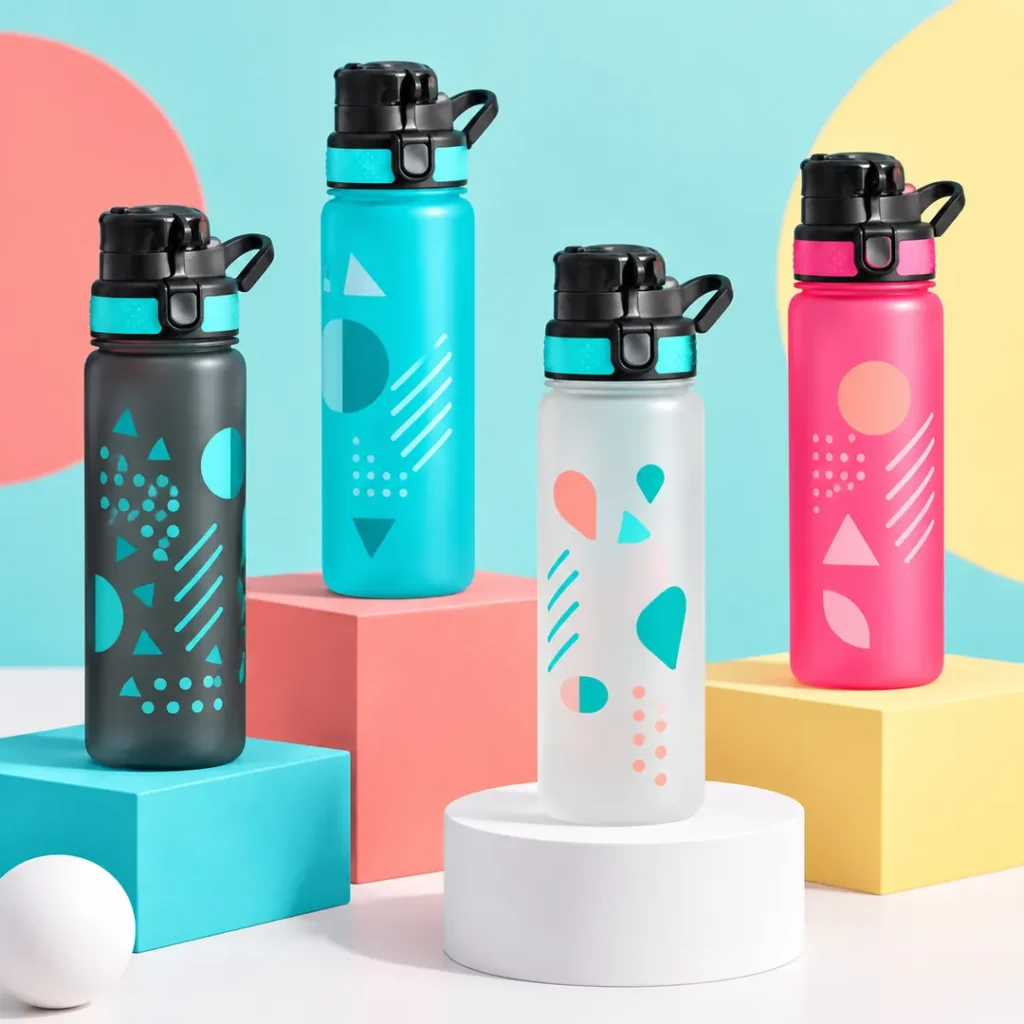

Active adults with reusable water bottles beside a riverside cycling path

Custom Kids Water Bottles for Small Hands, Outings and Family Routines

A kids water bottle must be manageable for the child and practical for the adult who cleans and packs it. Opening force, filled weight, grip and accessible lid parts deserve as much attention as colors or characters. For child-focused brands and retailers, begin with a defined age group and supervised sample evaluation, then match the decoration, packaging and care details to that exact product.

Daily Use From Home to Clubs and Family Outings

A bottle can move from the breakfast table into a small backpack, then onto a club bench or playground picnic table. Children need to recognize their own bottle and use the lid without relying on several complicated steps. Parents need to reach the liquid-contact areas and replace worn parts.

Do not combine every child age into one design brief. Specify the intended users, their usual carry arrangement and the adult supervision expected. Product suitability and market requirements must be assessed for the actual age and model.

  • Home routines: a stable body and a drinking system the child can operate.
  • Small backpacks: manageable filled weight and no easy accidental opening.
  • Youth clubs: distinctive colors plus a separate personal name field.
  • Family outings: a comfortable handle and protected drinking area.
  • Gift collections: attractive packaging with accurate age and care information.
Capacity and Lid Choice for the Intended Age Group

Compare 350-500 ml models as an initial small-bottle range, then assess grip and filled weight with the intended users. Older children may prefer a larger bottle, but adding volume changes balance and handling. These are product-size examples rather than guidance on how much any child should drink.

Straw lids and flip spouts offer different opening, drinking and cleaning steps. Check whether a latch is intuitive, whether the open cover stays clear and whether the seal can be reseated by an adult. Review detachable components and product requirements for the intended age and destination market before approving a design.

  • Grip diameter: assess a filled bottle rather than an empty showroom sample.
  • Lid force: check independent operation in a supervised trial.
  • Carry handle: inspect comfort, snagging and interference with the lid.
  • Drinking parts: compare access, attachment and disassembly for cleaning.
  • Bag closure: assess leakage and accidental latch contact inside the bag.
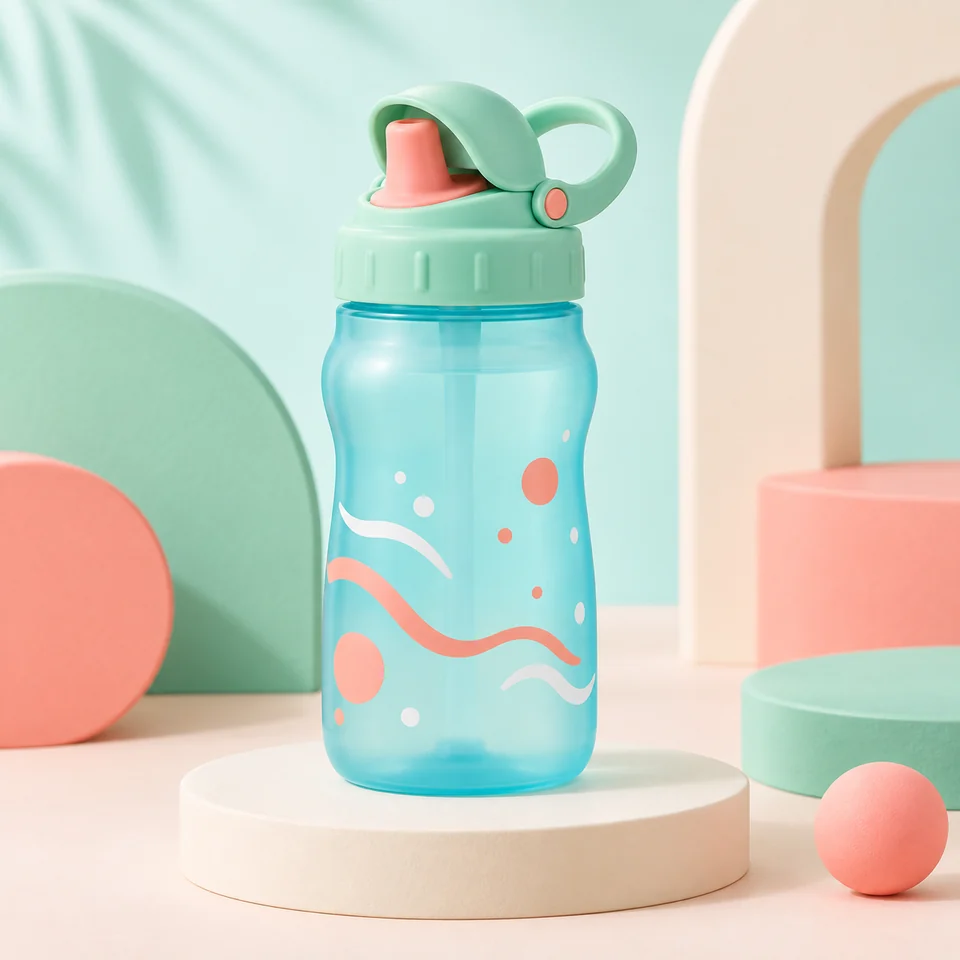
Small mint-colored patterned bottle with a top handle and drinking spout
A small handled bottle with a clearly visible drinking spout.
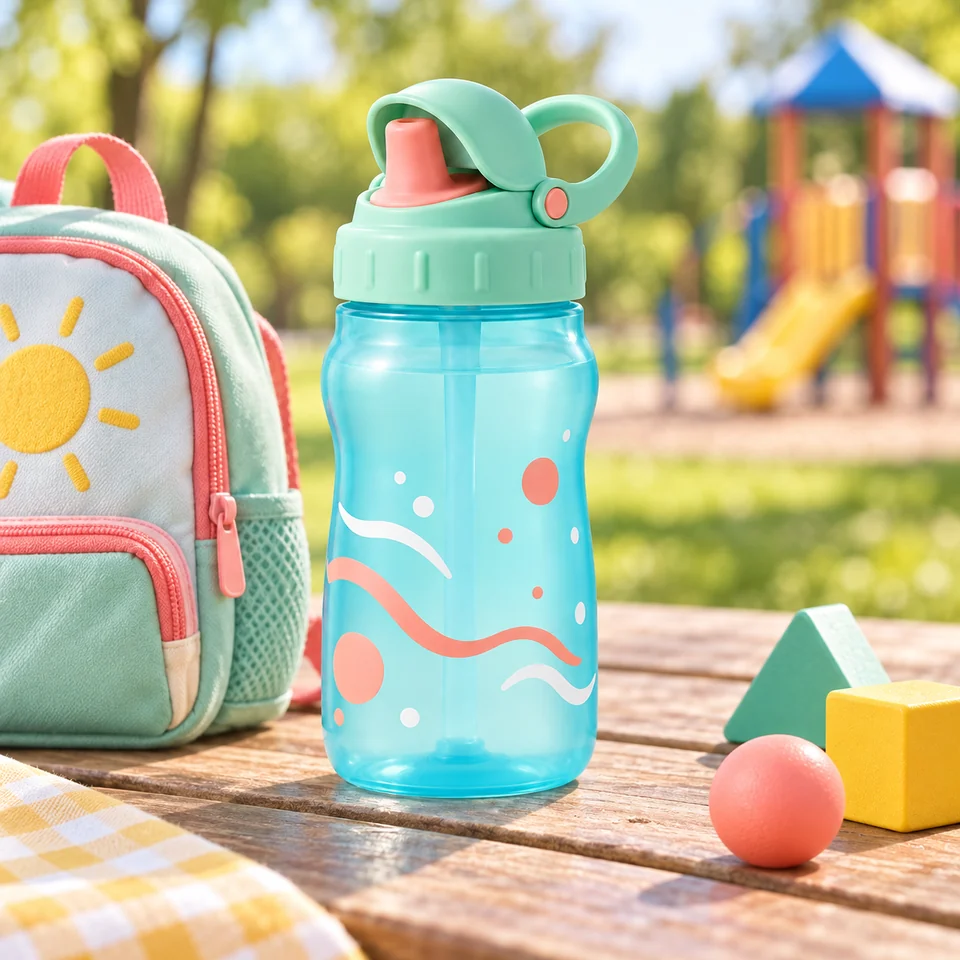
Mint-colored handled bottle beside a backpack near playground equipment
The small bottle presented beside a backpack in a playground setting.

Colors, Characters and a Useful Name Area

Make the main artwork recognizable without covering the entire body in competing elements. Leave a name field that parents can update; avoid publishing a full child name prominently in the main illustration. Use licensed characters only when the brand has the necessary rights.

Decoration should be evaluated alongside material and care specifications. Ask what washing and rubbing do to the actual printed sample, and keep product claims on packaging accurate. A bright design or BPA-free label alone does not establish suitability for every age or use.

  • Main panel: one clear character, brand mark or collection motif.
  • Name zone: a discreet writable or replaceable personal label.
  • Color coding: a useful distinction between siblings or club groups.
  • Packaging: exact volume, care instructions and confirmed intended age information.

Planning a Kids Bottle Collection and Bulk Delivery

Quote each size, lid and character variation separately. Too many combinations can create small production batches and complex replacement stock. A shared lid across several colors may simplify support, provided it remains appropriate for all included sizes.

Approve the complete product and its packaging before launch. Request the relevant documentation for the supplied model and destination market rather than accepting a report for a similar bottle. Build time for review and corrections into the receiving schedule.

  1. Define the age group, size options and daily carry use.
  2. Evaluate working samples with adult supervision and a cleaning trial.
  3. Review component suitability and model-specific product documentation.
  4. Approve character rights, name zones, packaging and color quantities.
  5. Inspect delivered stock and confirm the replacement-parts plan.

Parent-Friendly Cleaning and Replacement Parts

Lid channels, straws and seals must be accessible for cleaning. Check the supplied care instructions against the actual product, including any different wash limits for the lid and printed body. Parents should be able to identify the parts and reassemble them correctly.

Provide replacement part references without implying that any generic straw or cap will fit. If a component is damaged, loose or missing, the product should be assessed before further use rather than improvised with unrelated parts.

FAQ

Kids Water Bottle Questions

How should a kids bottle size be selected?

Start with the intended age, grip, bag and filled weight. Compare small capacities such as 350-500 ml in supervised trials rather than choosing by volume alone.

Is a straw lid always better for children?

No single lid suits every age and routine. Compare opening, drinking, closure and cleaning with the intended users and adult caregivers.

Where should a child name be placed?

Use a discreet dedicated name field or replaceable label separate from the main artwork. Avoid making a full personal name the most prominent design feature.

What documentation should a kids bottle supplier provide?

Request documentation relevant to the exact model, components, intended age and destination market. Check that the supplied product matches the reviewed specification.

Can characters and custom patterns be printed?

They can be specified within the decoration limits of the model. Confirm artwork ownership or licensing and approve print durability and care instructions on a sample.

How can replacement stock be kept manageable?

Limit unnecessary lid variations, record part references and confirm future availability. Shared parts help only when compatibility and age suitability are maintained.

Build the kids bottle around the child grip and the parent cleaning routine. A defined age brief, working sample and clear care information make the collection easier to select and support.

Related Water Bottle Products

Compare bottle shapes, capacities, lids and customization options for your order.

All Products
500ml Kids Sippy Water Bottle with Straw

Kids Water Bottles

500ml Kids Sippy Water Bottle with Straw

500ml kids sippy water bottle with straw for school, travel and children’s drinkware programs, available for custom graphics, color and packaging.

500 mlPlasticSippy / straw lidStraw
Kids Plastic Water Bottle

Kids Water Bottles

Kids Plastic Water Bottle

Reusable kids water bottle family for school, travel and everyday drinkware programs, with custom colors, logo and packaging available after final capacity confirmation.

Approx. 700ml family; confirm final capacityPlastic / Tritan optionsKids sports lidDirect drinking

Related Scenarios

More School & Kids Options

Back to School & Kids

START YOUR PROJECT

Tell Us What You Want to Build

Send the bottle type, quantity and brand requirements. Add a reference file when you have one.

◉ Fast response◉ Confidential inquiry◉ No obligation
Chat on WhatsApp