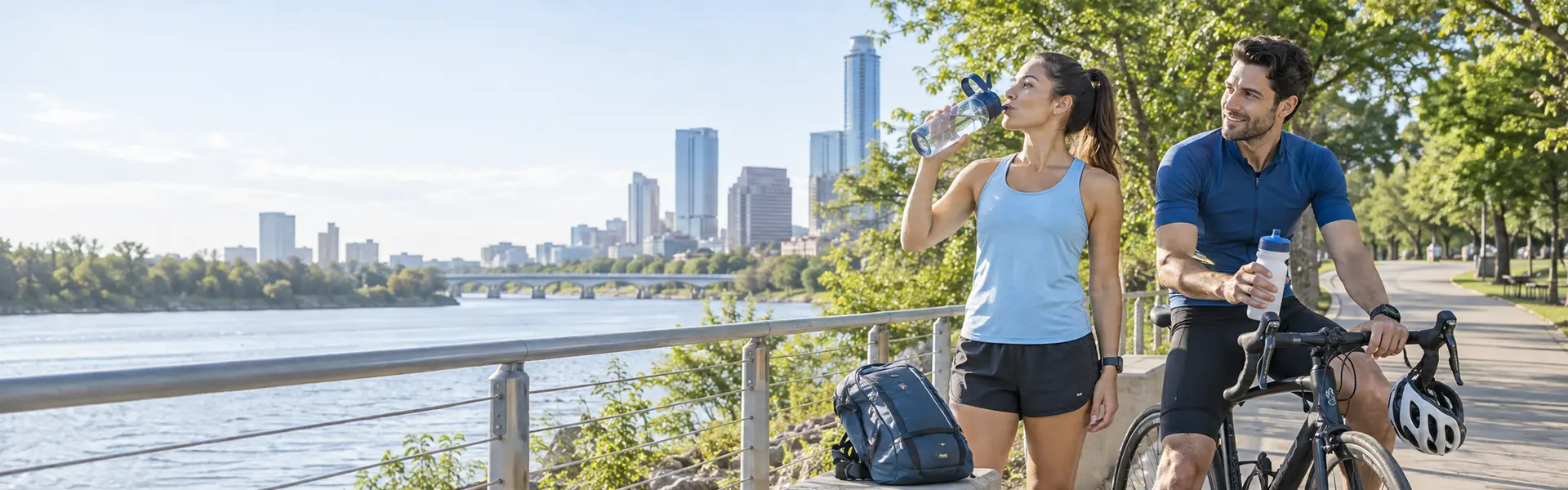
Active adults with reusable water bottles beside a riverside cycling path

Custom Cycling Water Bottles for Club Rides, Races and Bike Shops

Cycling water bottles serve riders on training routes and represent clubs, sponsors and bike shops off the bike. A useful cycling bottle combines manageable squeeze force, controlled drinking flow and a shape suited to the intended cage. Club and race buyers also need consistent sponsor artwork and packing that makes distribution straightforward. Start with the riding format and delivery plan before choosing decoration or custom colors.

Club Rides, Race Support and Shop Merchandise

A club bottle is reused across weekly rides, while a race bottle may be supplied in a rider pack or at a support point. Bike-shop merchandise needs a presentation suitable for individual sale. These channels can share a model, but their quantity, artwork and packing should be specified separately.

Consider road rides, off-road routes and indoor trainers. Dust protection may be useful off-road, but an extra cover can slow access. Choose a compromise for the intended rider rather than adding every feature to a single bottle.

  • Weekly club rides: consistent colors and a comfortable repeated squeeze.
  • Race rider packs: clear event identity and manageable handout quantities.
  • Organized support points: closures and packing suited to the approved distribution procedure.
  • Bike-shop sales: identifiable capacity, care details and shelf presentation.
  • Indoor training: stable placement and easy access to the chosen drinking valve.
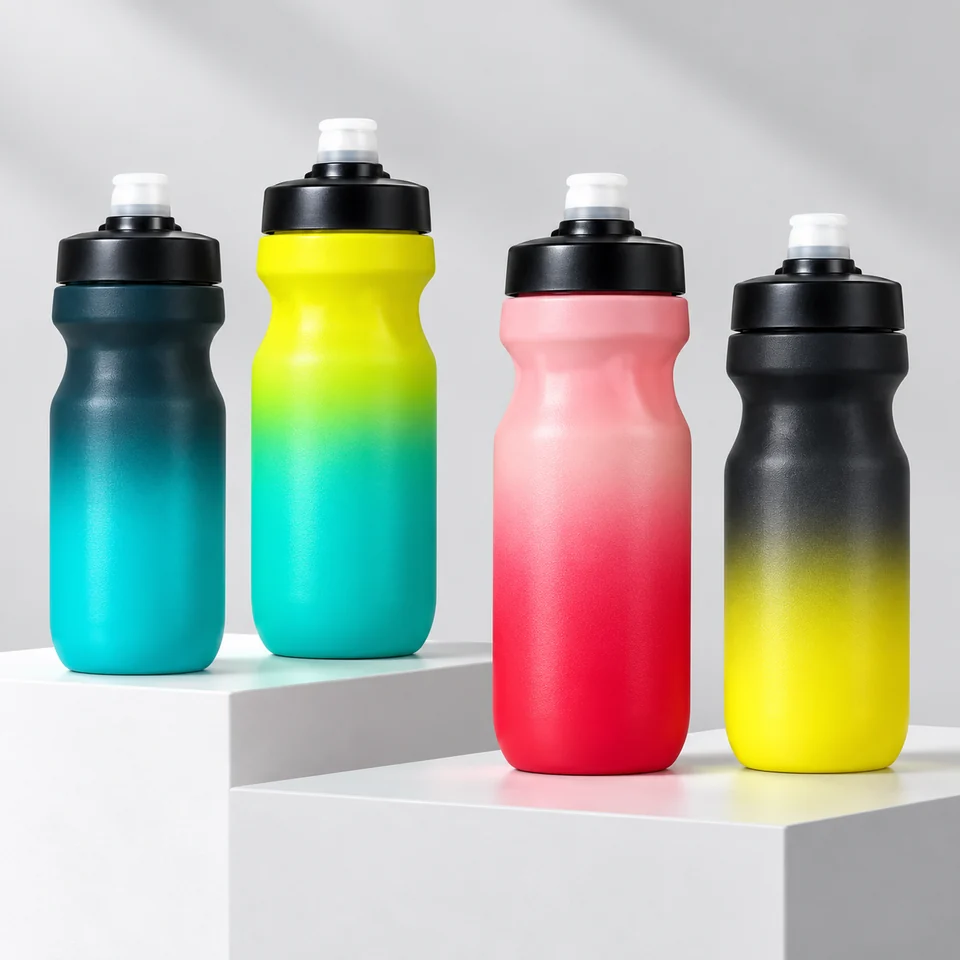
Squeeze Feel, Valve Flow and Capacity Work Together

Compare 500-750 ml bottles for a core cycling collection. A larger model can add volume but may be harder to remove from a small frame. Check cage and frame clearance on an assembled sample, then assess grip, nozzle access and drinking flow during riding.

Try the sample filled to normal use level and again partly empty. Body stiffness, valve resistance and air return influence the effort needed to drink. Check the valve closed in transport as well as open during use. A soft body alone does not establish controlled flow or leak resistance.

  • Squeeze body: assess recovery after compression and comfort with riding gloves.
  • Nozzle: compare opening force, flow and positive closing behavior.
  • Mouth opening: check filling access for the intended drink mix and cleaning brush.
  • Protective cover: weigh off-road cleanliness against access and extra parts.
  • Filled handling: test the chosen size with the intended cage and frame.
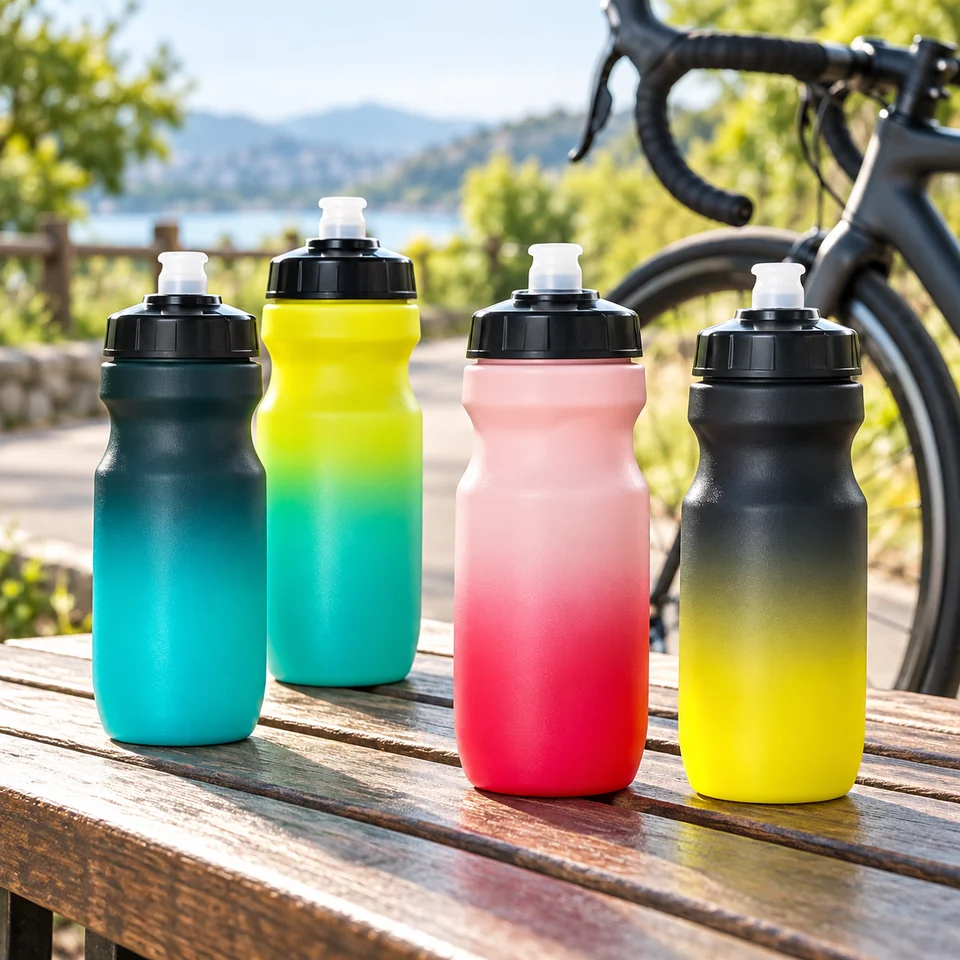
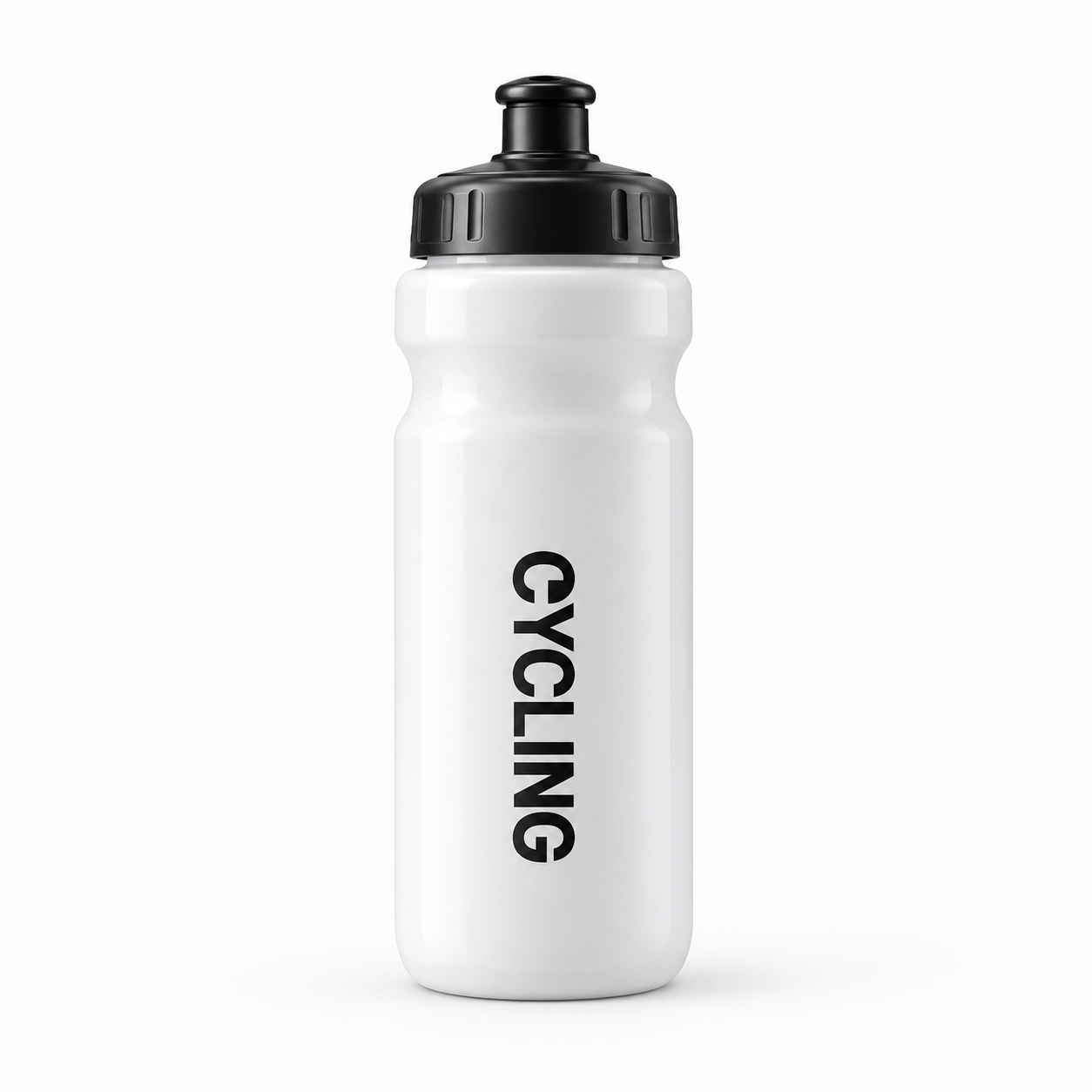
Colorful squeeze-format bottles with drinking nozzles
Colorful squeeze-format bottles with nozzle-style caps.
Colorful squeeze bottles displayed beside a bicycle
Cycling bottle formats presented beside a bicycle.

Club and Sponsor Artwork on a Flexible Bottle

A sponsor panel should be readable on a curved, squeezed body. Keep important marks away from heavily flexed grip areas where possible and request decoration appropriate to the flexible surface. An approved flat artwork file is only one step; review the finished bottle from the angles visible on the bike.

Align club identity with sponsor rights before production. If an event sponsor is temporary, decide whether the bottle is a seasonal item or enduring club merchandise. Use packaging for dates and campaign messages when the bottle is intended for year-round shop sales.

  • Main panel: club or event identity with the agreed headline sponsor.
  • Opposite panel: secondary sponsors with consistent spacing.
  • Grip zone: keep critical text clear of the main squeeze area.
  • Retail label: capacity, model identity and confirmed care instructions.

Bulk Cycling Orders and Race Distribution

Separate participant allocations from volunteer stock, club sales and replacements. If bottles are placed in rider packs, check the pack size and whether they arrive assembled and individually protected. If distribution happens at a support point, coordinate bottle preparation and local handling with the organizer.

Agree the venue receiving deadline rather than the race start date. Provide artwork, capacity, model, color splits, packing counts and the delivery contact. Late sponsor approvals can delay decoration even when stock bodies are available.

  1. Choose the riding use, volume and representative cage references.
  2. Evaluate a filled sample for squeeze feel, flow and closure.
  3. Approve sponsor artwork on the actual flexible body.
  4. Confirm club, retail and event quantities with their packing plans.
  5. Receive stock before rider-pack assembly or support-point preparation.

Cleaning After Water, Drink Mixes and Dusty Rides

Drink mixes can leave residue around the nozzle and threads. Specify access to those parts and care instructions for cleaning after use. A removable valve can simplify maintenance, but the user needs to know how to reseat it correctly.

Inspect body recovery, nozzle wear and decoration after repeated handling. Follow the exact model washing and temperature limits; do not extend a cold-drink cycling specification to hot liquids simply because the body is reusable.

FAQ

Cycling Bottle Questions

What capacity works for a club cycling bottle?

Compare 500-750 ml models, then check larger options against rider needs and frame clearance. Refill access and the riding setup should guide the selection.

How is squeeze performance evaluated?

Test the complete bottle at different fill levels. Assess body force, recovery, valve opening and flow, including with the riding gloves used by the group.

Does a cycling bottle always fit a standard cage?

No universal fit should be assumed. Test the exact model with representative cages and frame sizes, especially when choosing tall or insulated bottles.

Will sponsor printing tolerate repeated squeezing?

Specify decoration suitable for the chosen flexible surface and review a decorated sample after repeated handling. Agree an acceptance method with the supplier.

How should bottles for a race be packed?

Match packing to rider packs, shop sales or support-point use. Confirm carton counts, protection, assembly state and the event receiving deadline.

Can the same bottle be used for sports drink mixes?

Confirm the permitted contents for the model and assess nozzle cleaning with the intended mix. Do not make compatibility claims based on the body material alone.

Select a cycling bottle by testing squeeze, flow and fit as a complete product. Then approve sponsor visibility and distribution packing so the same order works for riders, organizers and the club shop.

Related Water Bottle Products

Compare bottle shapes, capacities, lids and customization options for your order.

All Products
20oz / 24oz Cycling Squeeze Water Bottle

Squeeze Water Bottles

20oz / 24oz Cycling Squeeze Water Bottle

Flexible 20oz / 24oz bike water bottle with a fast-flow locking spout for cycling, team sports and custom-logo programs.

20 oz / 24 ozFlexible plasticFast-flow locking spoutSqueeze nozzle
20oz Cycling Squeeze Water Bottle

Squeeze Water Bottles

20oz Cycling Squeeze Water Bottle

Compact 20oz flexible cycling bottle with a sports squeeze nozzle for road biking, mountain biking, training and team-sport hydration.

20 ozFlexible plasticSports squeeze nozzleSqueeze nozzle

START YOUR PROJECT

Tell Us What You Want to Build

Send the bottle type, quantity and brand requirements. Add a reference file when you have one.

◉ Fast response◉ Confidential inquiry◉ No obligation
Chat on WhatsApp